

THE OTHER SIDE OF GOLF
Golf is often touted as a gentleman’s game, or so it seems. We can be truly nice and noble elsewhere, but when it comes to golf, our stranger side shows up. Maybe it’s the high stakes or the macho thing. Or blame it on golf’s myriad rules and situations, for they trap us and unwittingly expose our innate flaws and follies. And it doesn’t matter who you are. So, if you are about to pick up golf be prepared to see the worst in yourself and your friends. If you still happily play the game, good for you and carry on. But if you regularly suffer in silence, or vent your frustrations only when you get home, read on and enjoy the anecdotes. They may help you.

TOO MUCH, TOO LITTLE
If you play golf, you will have rules thrown at you some time or other, even if it’s a social round. Now, rules are important in every sport. It makes winning meaningful and boasting legit. In soccer, you can escape by feigning a foul to get a penalty, and they will tell you that it is part and parcel of the game. In golf, there are a lot more and stricter rules to follow, whether you are a seasoned golfer or a newbie to the game. But while some may be familiar with the rules, they so often flout them. Some out of ignorance or misinterpretation, but some shrewdly continue with their wayward ways without any compunction. Many of these rules won’t make a difference to most players, but they slow the game down, they make people argue and unhappy, they embarrass your boss or guests and they turn some friends into crooks.
IMAGINE: We have 2 sets of rules. One for the pros and serious pretenders, i.e. the official Royal St Andrews/USGA pocket-size rulebook, which has 200+ pages and at least 130 sub-rules. And the other one for lay golfers, a simple 2-page leaflet containing only the most basic rules like free drops, penalties and simple etiquette. Forget those finer but trivial stuffs, like if the ball moves when you address it – no problem. Ground the club in the bunker; repair a spike mark on the green – no problem. Hitting a golf ball is already tough enough so why have grown-ups fight over these little inconsequential rules.
AN EYE FOR AN EYE
It is good manners to stay still and silent when golfers are teeing off. You learn a lot of that just watching the professionals play on Golf Channel. But some players choose to practise their swings or engage in some conversation close by just when you are hitting your shot. Or they stand very close to you or right behind your swing path. Some do it on purpose to annoy you so you hit a bad drive, but some just have no idea it might affect you. Some think a sorry is good enough, but in golf a sorry is always too late. It sounds simple, but people like that rarely change. If they stop doing it to you, they will do it to someone else, or somewhere else.
Some just have a knack of making you feel worse after a bad shot. Like when you push your ball out-of-bounds (OB), they shout ‘why you hit it there, it is OB you know’! Hell, who deliberately wants to hit a ball OB? They will tell you ‘you topped it; so short; went bunker’ like we can’t see the obvious ourselves. Then there are the teaching pros among us who will not hesitate to analyse your swing immediately after every shot – “you looked up; swing too fast; never follow through”. Most are oblivious to your feelings. And the pain continues shot after shot.
Just when you are preparing to hit a pretty tough shot, this guy comes along and tells you horror stories about the shot you are about to make. He had been there before, certainly not easy, he says. Your head is now screwed up in knots but you go ahead to take the shot anyway, only to top your ball into the water. What a helpful friend.

And then there are golfers who can’t resist standing in your line of putt. If you gesture to them, they will grudgingly drag their heavily shackled feet maybe 2 feet away but still very much in your line. Each time they can benefit from your putt, they would do just that – stand in your line. Some even squat down behind you to watch your putt. And they think you are petty if you mind. And then there are those who have no idea where your ball marker is, and will crisscross your intended line of putt just to read his own line or when triumphantly striding to the cup after sinking a long putt. To a self-centered golfer, only his game matters – yours, oops sorry!
IMAGINE: These things are pretty harmless, so just endure them. But if they affect you, then give them back the same medicine. If they don’t seem bothered, forgive them as they are genuinely ignorant. If they get bothered, give them the “you can, but I cannot?” lecture. You will be surprised how fast people can learn, and how easy they can forget.
PITY OR AVOID THEM
“Did you see my ball, where is my ball?” your buggy-mate keeps asking. If he is driving the buggy, he will race straight to look for his ball, regardless where your ball is. To him, your ball is secondary. He must locate his first and fast, like the ball may decide to hide itself. The more savvy ones will drop you at where your ball could be and then drive off to look for theirs, especially if they hit it to some awkward place – there the ball may be delicately kicked out of the deep rough or OB line, if unfound a new ball may magically appear or the ball’s lie is deftly improved with some club flick or fancy footwork – and suddenly a great shot is hit out of a seemingly bad lie from nowhere. When players don’t want you to help them look for their ball, better be very wary and watch them closely.

Everyone saw where his ball landed right there on the fairway, but the player will still pick the ball up “to identify” it, and then replace it floating neatly on the Bermuda grass. Some balls sink deep into the rough, but some players will quickly call out “my ball is plugged” and proceed to pick it up and drop it on a better patch without waiting for anyone to verify it. Well, all of us always wish for better lies, but some have this compulsive instinct to just go ahead and improve it anyway, and anywhere.
When you see a ball on the ground along your line of play, it is expected that you just leave it there. But for some there is always this urge so long as no one is around. And it may not matter what ball it is, Titleist Pro V1 or whatnots. So you pick it up. Sure enough someone suddenly appears and asks if you had seen a Pro V1. Some people would qualify for Hollywood and say no. Some will reluctantly take it out of their pocket and throw it on the ground. It is like finders keepers and you just don’t get it. And there are those who will play your ball if it happens to be near to where they can’t find theirs. They pretend to recognise it, and coolly continue their play with your ball. It means nothing to such people – they either elude being caught, or they plead mistaken belief. No guilt or embarrassment whatsoever.
You will lay bare your character on the golf course, if you are the vulgar hot-tempered, impatient or boorish type. Like after a terribly bad shot, the expletives come out coupled with repeated slamming of the club on the ground. It is not his turn yet, but he goes ahead and hits or putts his ball anyway. He mishits his ball dangerously towards your direction and just turns nonchalantly away. He hits the ball onto the green knowing you are still there. No warning shouts and no sorry. Some pretend they can’t see you. Some think it is their right because you are not fast enough. Some believe their money can buy anything. Some are just unforgivable idiots.
IMAGINE: Nothing much can help these people, although most certainly deserve our pity for a bad upbringing. You can avoid them but don’t bring yourself down to their level. For the dangerous ones, the only justice is they get hit by a ball some times. Or, if it is a clearly reckless shot and it injures someone, he should be charged and put in jail.
TO LAUGH OR TO CRY
Few are blatant cheats. But many will find all means to try to get an advantage, beginning at the tee box. Tee-markers are there for a purpose, like a starting line. But some will tee up ahead of that line to try to gain a few precious inches off the tee. When you point it out, they will go to the side and try to disprove you or they move their tee like an inch back. Then they repeat it at the next hole. And if someone has this habit on the tee box, better observe his ways for the rest of the play.
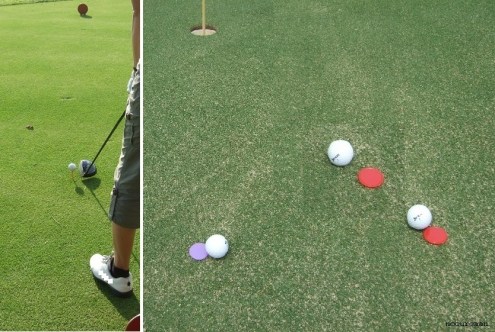
The same gain craving happens on the green. The usual way most golfers mark their ball on the green is to gently place something like a coin just behind the ball. The more ingenious will throw their coin when no one is watching, aiming to land it somewhere between the ball and the hole. That sure shortens the distance of your putt. Then there are those who will shove their coin deep underneath the ball to mark it, but when replacing the ball they put it some inches in front of the coin. Another will put their marker to the side of the ball, and then replace the ball in front of the marker. This way, if you mark and re-mark a few times, you could end up a lot closer to the hole and qualify for a “putter-length” gimme. Some are really a natural and will unashamedly persist with such routines. They usually get away with it as few golfers like to openly confront them on the green, although they will bitch about it after the game.
Then there are golfers who always need to know the exact distance from ball to target each time they want to hit a shot. Never mind how good they are. They test the wind, pull out their range finder, measure, pick a club, measure again, and waste precious minutes to decide which club to use. They will measure even when just a short pitch away from the green. And don’t be too happy if your buggy mate has a range finder. Most times he will not share the info or the device with you. It is an expensive device, you know, so BYO. Some people forget that to know and to do are very different things in golf.
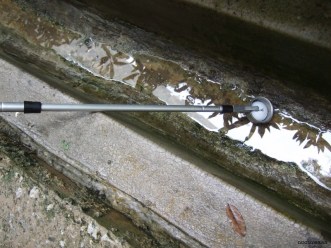
And some seriously refuse to buy their own balls. They even go to a driving range to pilfer some. That’s why occasionally we come across balls marked “Range Practice” on the course. Some resort to ball fishing while they play. They carry this extended “ball picker” golf club lookalike and walk the periphery of every water body along the course. They will volunteer to retrieve your ball if it happens to be in the water, and then continue to collect 3 more. To some, it is like a drug, an addiction – if I can’t pick 5 balls a day, it is a bad day at golf.
IMAGINE: Let it be if you have only these kinds of friends to play with. If they are told, they will be upset with you, rather than be shy about it. Also nobody says you cannot be well-heeled and cheapskate at the same time.
CAN’T BEAT THEM, JOIN THEM
If you happen to play well, golf is a lot of fun; if not, it is really miserable. Beating your friends or winning a competition is everything, no matter what they tell you. And some are so driven they do all kinds of things to try to win – ignoring rules, altering scores, colluding with flight-mates or just being difficult with everything – whether for a trophy, a little wager or just boasting rights. Then there are those who will mask their real ability. A few want pride in a low handicap, but most prefer a higher one for obvious reasons. And it is easy to manage scores and handicaps, like 3-putting from 3 feet after a hole is lost or playing triples and quadruples when nothing more is at stake. Next is not to submit good scores. So when you meet a stranger on the 1st Tee who tries to initiate a friendly wager, just play poker – call his bluff if your own handicap is a bloated one.

But the joy or misery does not stop at the end of each game. Some are fortunate to have honourable and generous friends to play with, so settling the after-game meals and drinks is an easy task. But some will order the most and the best if they win, but will cite a home emergency when they lose. Some leave their own personal tab for whoever ends up paying at the end of the day. Some will forget their wallet and then forget they owe you. Some sing their favourite leaving line “next time on me”. And you wonder how a few always manage to beat everybody and very rarely get to pay anything.
IMAGINE: Be smart. It is impossible to police every golfer’s handicap, so take your risks if you wish to have a wager. Avoid the scrooge. And remember there are no poor golfers, and no one will pity you when you lose.
NOCUREMAN:
Every golfer has his pet peeves, but if you are unable to openly tell your fellow golfers in the face, just subtly point them here. For some, it is impossible to change. For others, hopefully they will get the hint.
Have fun, anyway.

 nocureman